Panic is a sudden, intense, debilitating form of anxiety that often causes physical symptoms, such as:
- Racing heart
- Shortness of breath
- Shaking or trembling
- A feeling of impending doom
People often use “anxiety attack” and “panic attack” interchangeably, but they describe different experiences.
Anxiety Attacks vs. Panic Attacks
Anxiety attack:
- Develops slowly after a long buildup of stress
- Example: dreading an upcoming job interview so much that, right before it, you begin to shake and hyperventilate
Panic attack:
- Has a rapid onset
- May occur unexpectedly or after encountering a trigger (e.g., loud noises, dogs, crowds)
Sometimes, the fear of having a panic attack is enough to trigger one.. I’ve had panic attacks just from the act of waking up in the morning.
Both anxiety attacks and panic attacks are painful and real. Both deserve compassion and care.
The Physiology of Panic
The image to the right shows how panic happens. In a moment of panic, a person cannot think their way out of it. Here’s why:
- The amygdala (the brain’s alarm system) triggers the release of stress hormones like adrenaline and cortisol.
- These hormones activate the sympathetic nervous system, increasing heart rate, breathing, and muscle tension.
- Blood is redirected away from the neocortex (responsible for rational thought) and toward the limbs to prepare the body for fight or flight.
- The body will keep this up until the danger has passed.
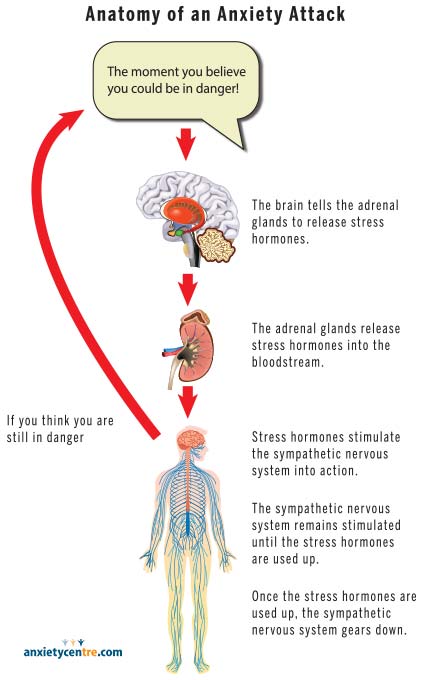
This entire process happens in milliseconds. Rational thought temporary shuts down. The nervous system can only calm once stress hormones are metabolized, typically within 10 to 30 minutes.
How to Support Someone During a Panic Episode
When supporting someone in panic, the goal is not to stop the panic. The goal is to help them move through it safely.
First, guide the person to a quiet, safe space if possible. Offer calm reassurance, such as:
“This will pass. You’re safe. I’m here.”
Practice slow breathing together, such as 5–5–7 breathing:
- Inhale for 5 seconds
- Hold for 5 seconds
- Exhale for 7 seconds
(A longer exhale signals to the body that the danger is passing.)
Encourage grounding exercises, like: “Tell me five things you can see, four things you can feel, three things you can hear…”
These strategies gently re-engage the thinking parts of the brain and help the nervous system settle.
Reflection Exercise
Take a moment to pause and consider the scenario below. You can reflect quietly, write a few notes, or skip this section if now isn’t the right time.
Shandra is in her late 30s with a background in education. She originally wanted to be a teacher but stopped applying after a traumatic student-teaching experience. Later, she earned a graduate degree and began pursuing work in higher education.
One day, Shandra called while breathing heavily and speaking quickly. She shared that she had been offered a job but felt terrified that requesting accommodations would jeopardize the offer. The school was connected to a hospital where she had previously received physical therapy, and she feared they would “find out” and reject her.
- What factors might have contributed to Shandra’s anxiety or panic response in this moment?
- What past experiences could be shaping how threatened or unsafe this situation feels to her?
- From a non-clinical perspective, once Shandra is no longer in a state of panic, what kinds of information or support might be helpful to offer?
Remember to notice what you’re thinking and learning. Take a break if you need one.
When you’re ready, move on to the Module 2 Summary and Reflection.
 Disability and Mental Distress